
Industry’s Annual Conference
October 15-17, 2026 | Atlanta, GA USA
LEARN
New Here, Start Here →
Understand the Industry…
BUILD
Building or Refining a Practice →
Understand the Mindset & Culture…
Lead
Best Practices. Clear Thinking.
Credible Data. Real-World Insight →
Leadership Hub…

concierge medicine today’s
LEADERSHIP HUB
PRACTICE OPERATIONS
Workflows, Staffing, and Systems That Actually Work in a Concierge Medicine Practice
This Focus Area exists to help physicians and practice leaders build operational systems that are efficient, compliant, scalable, and realistic for membership-based care.
For Physicians. For Teams. For Sustainable Care.
Concierge and membership medicine promise something rare in modern healthcare: time, access, and relationship-based care.
But those promises are only sustainable when operations support them.
Behind every calm, high-trust practice is a disciplined operational structure — one that protects physician time, supports team performance, and delivers a consistent patient experience without chaos.
Why Operations Matter More in Concierge Medicine
In traditional volume-based care, inefficiency can hide behind volume.
In concierge medicine, inefficiency is exposed quickly.
Smaller panels and higher expectations mean:
Every workflow is visible
Every delay is felt
Every breakdown affects reputation
Every staffing decision matters
Strong operations protect the model.
Weak operations strain it.
When Operations Are Working Well
You will notice:
Fewer urgent interruptions
More predictable days
Higher patient confidence
Lower team stress
Consistent communication
Sustainable physician workload
Operational strength is often invisible to patients —
but its absence is immediately felt.
What We Mean by “Practice Operations”
Practice operations are not just software or staffing.
They are the integrated systems that determine whether your practice feels calm or chaotic.
This includes:
Scheduling design
Staffing structure
Communication workflows
Technology selection
Financial processes
Documentation standards
Patient onboarding
Crisis and contingency planning
Operational clarity allows clinical excellence to flourish.
The 9 Core Pillars of Effective Concierge Practice Operations
By Concierge Medicine Today
All information in this Focus Area is educational and informational only and should not be considered medical, legal, financial, or professional advice.
Common Operational Mistakes
Replicating traditional primary care workflows
Underestimating administrative workload
Adding technology without workflow redesign
Lack of written protocols
Unclear staff roles
Informal financial processes
Reactive scheduling
Good intentions do not replace operational design.
-
Concierge medicine is built on time — but time must be engineered.
Key operational standards:
Appointment templates that reflect actual visit length
Protected administrative time
Defined response windows for messages
Structured new-patient onboarding
Clear lab and referral workflows
Consistent documentation practices
If your calendar controls you, the model will eventually feel like traditional care again — just with fewer patients.
Intentional workflow design preserves the promise of unhurried care.
-
Overstaffing drains margin.
Understaffing drains morale.Effective concierge staffing typically includes:
Cross-trained administrative/clinical support
Clear role delineation
Defined patient communication ownership
Coverage planning for absences
Scalable staffing as panels grow
Avoid building staffing models based solely on traditional primary care ratios.
Membership practices require different rhythms and expectations.Hire for:
Professionalism
Discretion
Communication skills
Adaptability
Cultural alignment
Skills can be trained.
Attitude rarely can. -
Technology should simplify the day, not complicate it.
Evaluate systems based on:
Ease of use for staff and patients
Integration with existing workflows
Data privacy and compliance
Reliability and support
Scalability
Common core systems include:
EHR appropriate for small-panel care
Secure messaging platforms
Scheduling and reminder systems
Billing and membership management tools
CRM or patient experience tracking tools
Before adding new software, ask:
Will this save time, or just move complexity around? -
First impressions determine long-term satisfaction.
A strong onboarding process should:
Clearly explain membership scope and expectations
Outline communication protocols
Review billing processes
Introduce team members
Provide written reference materials
Establish boundaries professionally
Confusion at onboarding becomes frustration later.
Clarity early reduces operational strain.
-
Most operational stress originates in communication breakdown.
Strong practices implement:
Centralized message management
Defined response time standards
Escalation pathways for urgent issues
Documentation of patient interactions
Consistent phone and email protocols
Patients should never wonder:
“Who do I contact?”
“When will I hear back?”
“Is this urgent or routine?”Clarity reduces anxiety — for patients and staff.
-
Membership medicine requires disciplined financial systems.
Operational priorities include:
Transparent pricing structures
Consistent billing cycles
Automated payment systems where appropriate
Clear refund and cancellation policies
Separation of membership and clinical billing when applicable
Regular financial reporting review
Financial ambiguity creates operational tension quickly.
Transparency protects trust.
-
Smaller practices sometimes assume they are exempt from formal compliance structures.
They are not.
Maintain:
Accurate documentation standards
HIPAA-compliant communication systems
Employment policy documentation
Clear service descriptions
Proper coding and billing where applicable
Legal review of membership agreements
Operational maturity includes regulatory awareness.
-
Operational resilience requires preparation.
Every concierge practice should have documented protocols for:
Physician illness or absence
Technology outages
Severe weather or local emergencies
Staff turnover
Patient emergencies
Data backup and recovery
Calm practices plan ahead.
Chaotic practices react. -
Not all metrics are useful.
Focus on:
Patient retention rates
Membership growth stability
Response time consistency
Patient satisfaction trends
Team retention
Physician workload balance
Avoid overemphasizing vanity metrics.
Operational success is measured in sustainability.
Resources in This Focus Area
Books
No More Waiting Rooms – Operational excellence and patient experience
The Doctor’s Guide to Concierge Medicine – Structural foundations of the model
Marketing Your Brand of Membership Medicine – Aligning operations with positioning
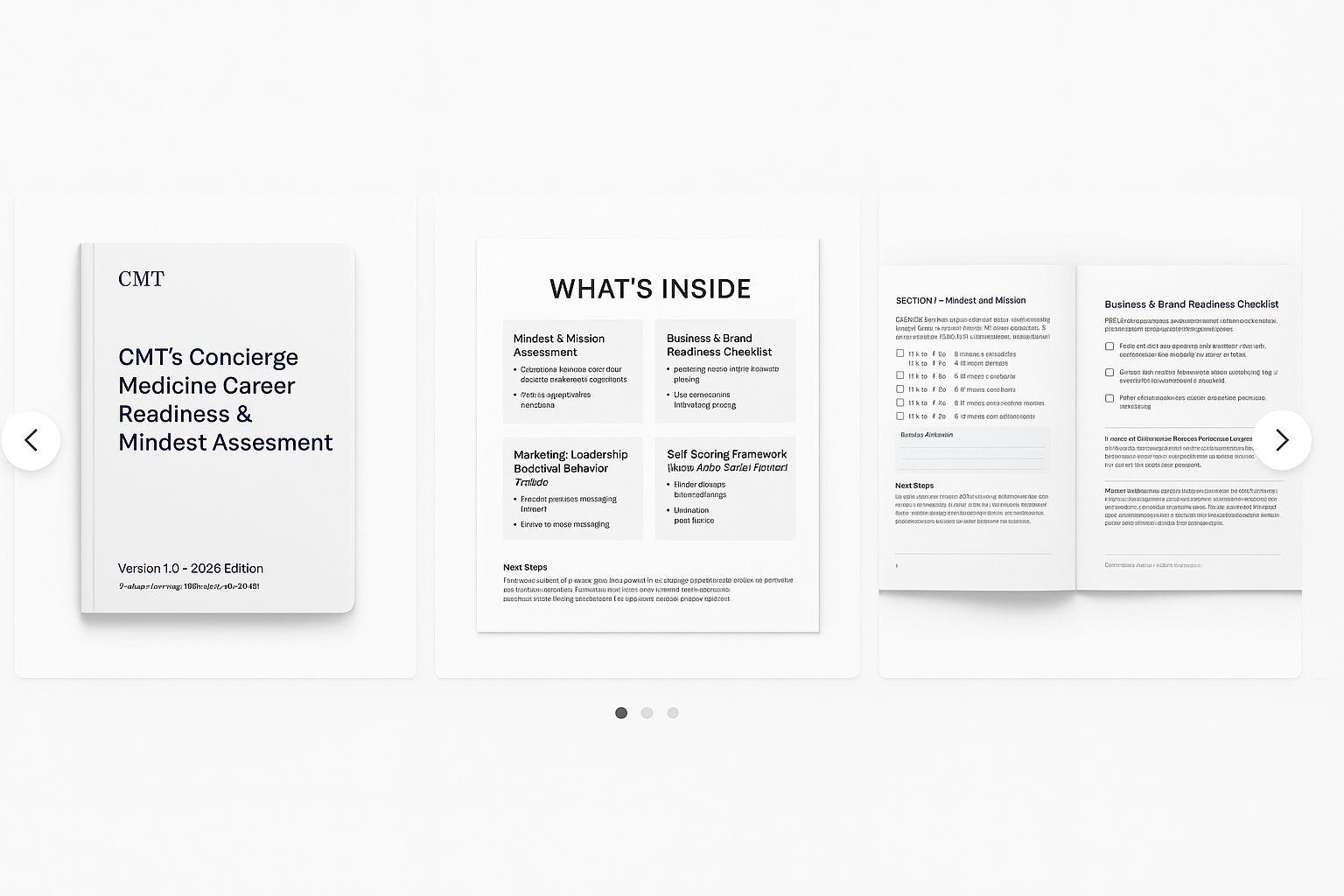
Guides & Tools
Podcast Episodes
The Operational Leadership Standard
The most respected concierge practices do not feel rushed behind the scenes.
They feel:
Structured
Calm
Responsive
Professional
Predictable
Sustainable
Operations are the infrastructure of trust.
When workflows, staffing, and systems are aligned, physicians can practice the way they intended — and patients can feel the difference.