Industry’s Annual Conference
October 15-17, 2026 | Atlanta, GA USA
LEARN
New Here, Start Here →
Understand the Industry…
BUILD
Building or Refining a Practice →
Understand the Mindset & Culture…
Lead
Best Practices. Clear Thinking.
Credible Data. Real-World Insight →
Leadership Hub…

concierge medicine today’s
LEADERSHIP HUB
Concierge medicine today’s LEADERSHIP HUB, FOCUS AREA:
PRACTICE CULTURE & TEAM EXPERIENCE
Building a High-Trust Environment That Patients Feel — and Teams Are Proud Of
Years of industry reporting, meant to inform and inspire are included below — not replace your attorney, accountant, or financial advisor. When it's time to act, talk to the right people for your situation.
In concierge and membership medicine,
culture is not a side conversation.
It is the product.
Patients may join for access.
They stay for how they are treated.
And your team stays for how they are treated.
This Focus Area exists to help physicians and practice leaders build a culture that is intentional, healthy, legally sound, and unmistakably aligned with patient-centered care.
The Bottom Line
Culture is not decorative.
It is decisive.
If concierge medicine is to lead the future of membership-based care, it must model environments where:
Teams feel valued
Patients feel respected
Physicians feel sustainable
Communication is clear
Standards are high
Practice culture is not soft strategy.
It is leadership in action.
Resources in This Focus Area
Books
No More Waiting Rooms – Experience as operational leadership
Remark-ology – Designing a practice worth talking about
Marketing Your Brand of Membership Medicine – Aligning culture and communication
downloads & Guides
Podcast Episodes
A Leadership Standard for Concierge Medicine
The most respected membership practices are not known first for décor, branding, or pricing.
They are known for:
Calm environments
Consistent service
Respectful communication
Stable teams
Patients who feel genuinely known
That reputation begins inside the walls of the practice.
The 8 Core Pillars of CONCIERGE MEDICINE Practice Culture & Team Experience
By Concierge Medicine Today, Leadership Hub
Common Culture Mistakes
Assuming small teams don’t need structure
Confusing friendliness with professionalism
Allowing “star” behavior from physicians
Ignoring team burnout signals
Overpromising availability to patients
Treating gratitude as optional
Culture erodes quietly — then suddenly.
-
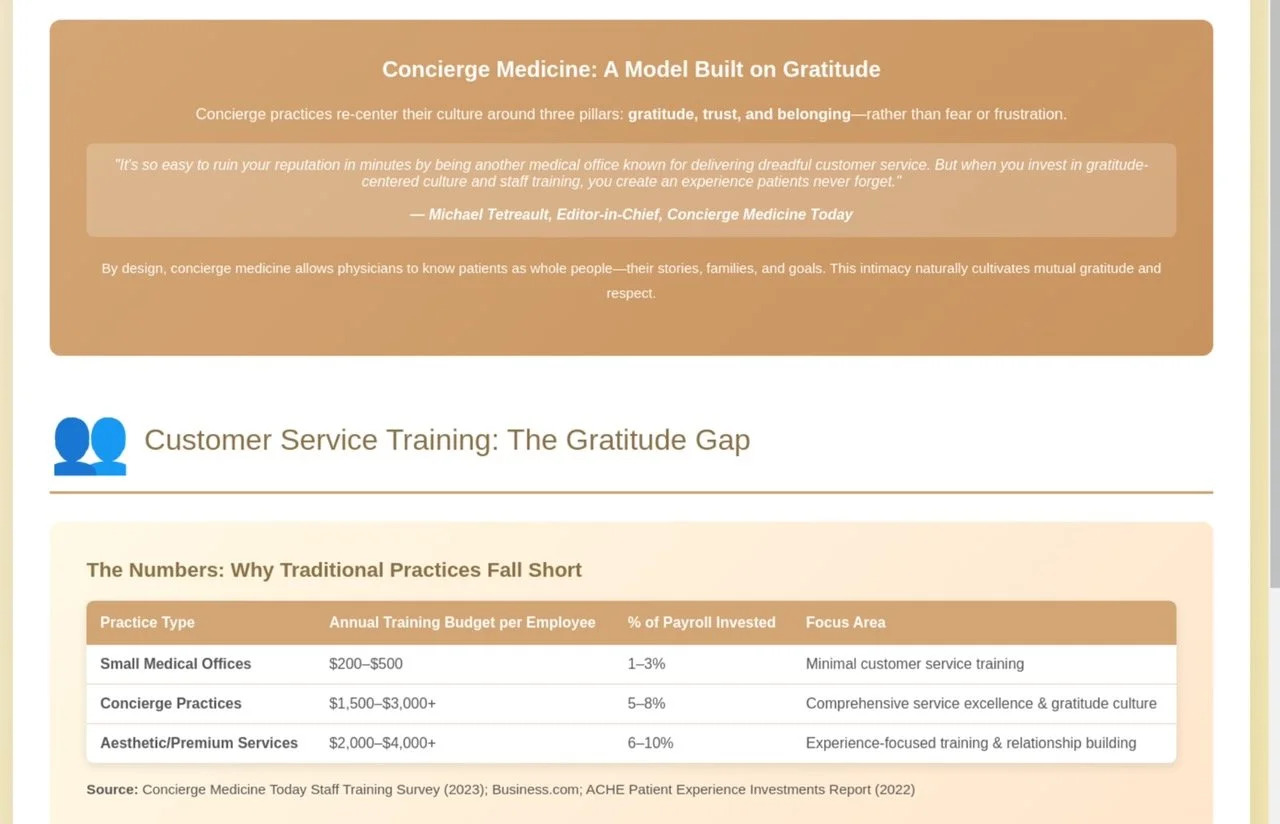
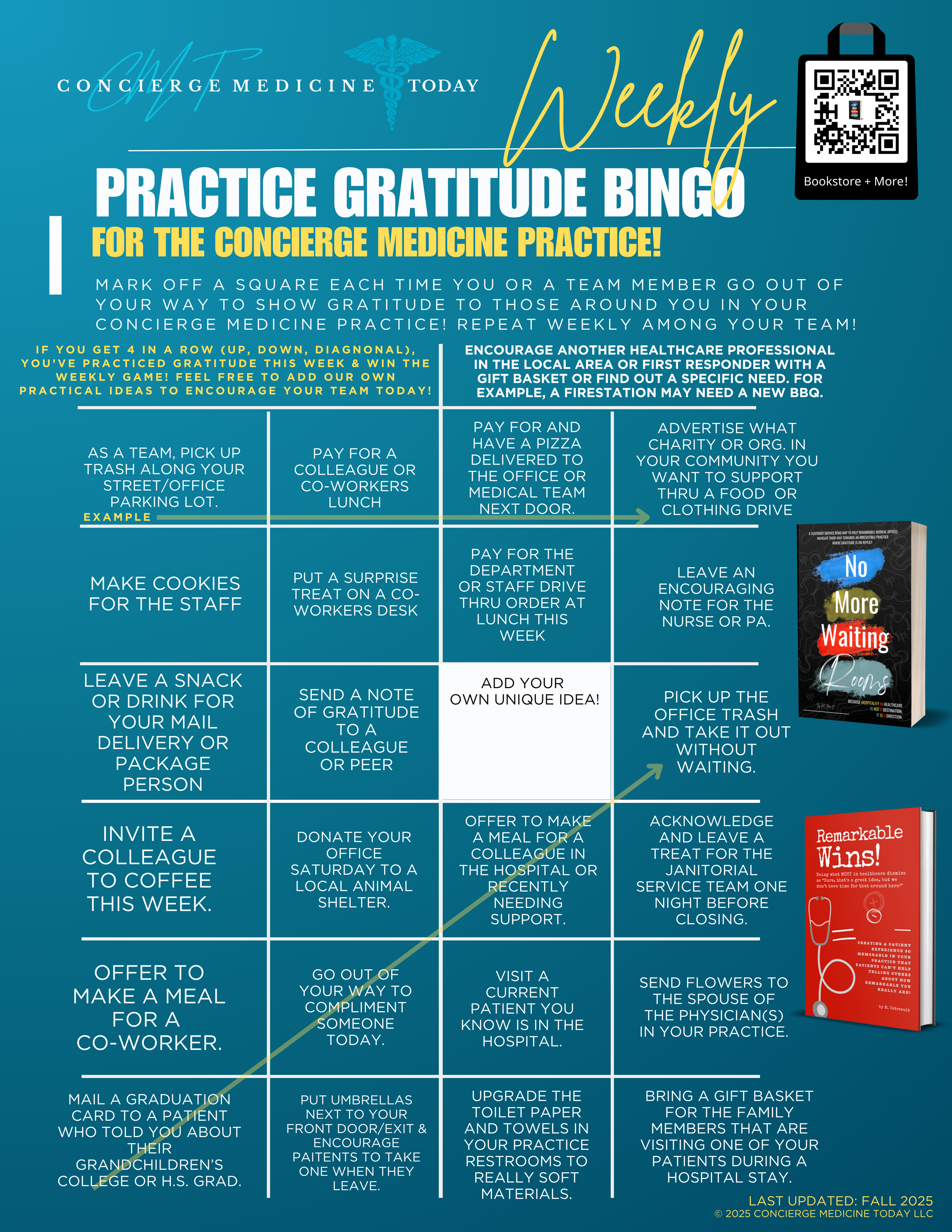
Gratitude in healthcare is not sentimental.
It is stabilizing.Practices that build structured gratitude rhythms see:
Higher morale
Lower turnover
Greater patient warmth
Better communication
Practical examples:
Weekly team acknowledgments
Handwritten patient notes (when appropriate)
Clear recognition of behind-the-scenes contributions
Celebrating small operational wins
Gratitude reduces entitlement — on both sides of the desk.
-
Being FOR patients does not mean saying yes to everything.
It means designing systems that demonstrate alignment.
Ten practical standards:
Answer the phone like the patient matters.
Clarify expectations before problems arise.
Explain membership scope transparently.
Respect time — yours and theirs.
Follow up before they need to ask.
Communicate delays honestly.
Avoid medical jargon when unnecessary.
Create onboarding that reduces confusion.
Respond thoughtfully, not reactively.
Protect professional boundaries while remaining accessible.
Being FOR patients requires clarity — not overextension.
-
Patients can feel tension.
If your team feels:
Undervalued
Micromanaged
Unclear about expectations
Emotionally drained
Patients will sense it — even if no one says it.
Strong concierge practices invest in:
Clear role definitions
Consistent communication rhythms
Documented protocols
Training in hospitality standards
Psychological safety
Burned-out teams cannot deliver unhurried care.
-
Concierge medicine often borrows language from hospitality — and for good reason.
Hospitality does not mean extravagance.
It means:
Anticipating needs
Reducing friction
Respecting privacy
Delivering consistency
Communicating warmth without crossing boundaries
Operational excellence is culture in motion.
When patients feel calm walking into your office, that is culture at work.
-
You cannot market what your culture does not support.
External messaging about:
Unhurried care
White-glove service
Relationship-based medicine
Must be backed internally by:
Scheduling policies that protect time
Team training
Clear patient selection criteria
Defined communication standards
Culture precedes credibility.
-
Membership medicine increases access.
Increased access without boundaries increases burnout.
Strong culture includes:
Clear after-hours policies
Defined response time standards
Escalation protocols
Transparent communication about urgent vs non-urgent needs
Boundaries protect physicians.
Boundaries protect teams.
Boundaries protect patients from confusion. -
In small-panel practices, unresolved tension compounds quickly.
High-performing practices:
Address interpersonal conflict early
Avoid gossip
Document recurring issues
Maintain professional HR standards
Separate personality differences from performance issues
-
It is easier to retain aligned team members than to constantly replace them.
Focus on:
Fair compensation
Clear advancement paths
Professional development
Emotional support
Transparent feedback
Retention reduces disruption — and disruption erodes culture.